New food packaging should be able to do more than just hold a product. It must minimize moisture loss, regulate respiration, withstand cold-chain transportation and still make food enticing on a supermarket shelf. PET (polyethylene terephthalate) and PET-based plastic formats are now standard material for many fresh food products, due to their ability to combine clarity, strength and price in a way that other materials cannot. PET's strengths and weaknesses make it important for both suppliers and buyers to be able to articulate where it succeeds and where it doesn't, so that packaging decisions perform well in actual operating conditions.
At Xiamen Xiefa Packing Co., Ltd., we produce essential fresh food packaging products such as supermarket fresh food trays, egg trays, takeout containers, beverage cups, and printed food bags. The experience gained from using the various PET plastic packages is detailed in the following sections, which cover the advantages and disadvantages of each type as well as how to select the right type for specific fresh food applications.
Why Pet Plas Packaging Dominates Fresh Food Categories
There are a number of reasons why PET is valued for use in fresh food packaging that directly impact the quality and shelf presentation of the product. For one, it exhibits great clarity. This transparency allows consumers to examine the contents without opening the pack. In retail, for example, the decision to purchase is often influenced by what the consumer can see through a clear PET tray or container used to display of produce, meat or prepared foods. Second, PET possesses good gas barrier and moisture barrier performance for the price, thus providing a longer window of opportunity for chilled and ambient fresh foods. Third, it's mechanically strong and light, so it also safeguards contents while stacking, delivering and automated handling without unnecessary freight weight.
Pet plas packaging is not only compatible with modern processing, but also offers favorable material properties. It can be thermoformed into trays with various cavities, extruded into film or injection molded into cups and containers. It is printing and labeling friendly, which is important for branding, nutrition information and traceability. It can also be used with modified atmosphere packaging (MAP) and appropriate lidding films to adjust the internal atmosphere to the respiration rate of the product—for example, a slow rate for meats and cheeses, and a faster rate for respiring produce.
In manufacturing, PET's recycling stream (resin code 1) represents a viable business opportunity in markets with an established collection system. As sustainability requirements grow, many buyers now require recycled content and/or mono-material PET structures that don’t compromise performance.
Limitations That Affect Performance and Cost
PET is not a panacea, and using it as a first choice can cause problems where they don't need to be. It is heat-sensitive. Standard PET softens at the high temperatures used in retort or high-heat filling, so it isn't suitable for applications requiring thermal sterilization unless crystallized PET (CPET) or heat-set variants are used. These alternatives, however, increase cost and reduce clarity. If the meal is going to be hot-filled or prepared in the microwave, this limitation must be considered when designing the meal.
Another restriction is oxygen barrier. PET offers moderate barrier, but this will not be adequate for high oxygen sensitivity fresh foods like certain cut fruits, cured meats and omega rich products for extended shelf life. This type of situation requires the use of barrier layers, oxygen scavengers, or other structures, which makes things more complicated and expensive. PET is also notch-sensitive, meaning that a small cut or crease can become a point of stress concentration during demolding and handling. Therefore, tray geometry and wall thickness need to be engineered to eliminate stress concentrators during these processes.
Environmental perception is a further challenge. PET is recyclable but in practice, there is significant variation in PET recovery rates between regions and lightweight flexible PET formats are not always collected. Unqualified “eco-friendly” claims can leave consumers skeptical of the brand. Last but not least, in most cases PET is derived from petrochemicals, meaning price fluctuations in resin markets directly impact packaging costs. Bio-PET is also available, but it accounts for only a small share of the market and is expensive.
Selection Tips for Fresh Food Applications
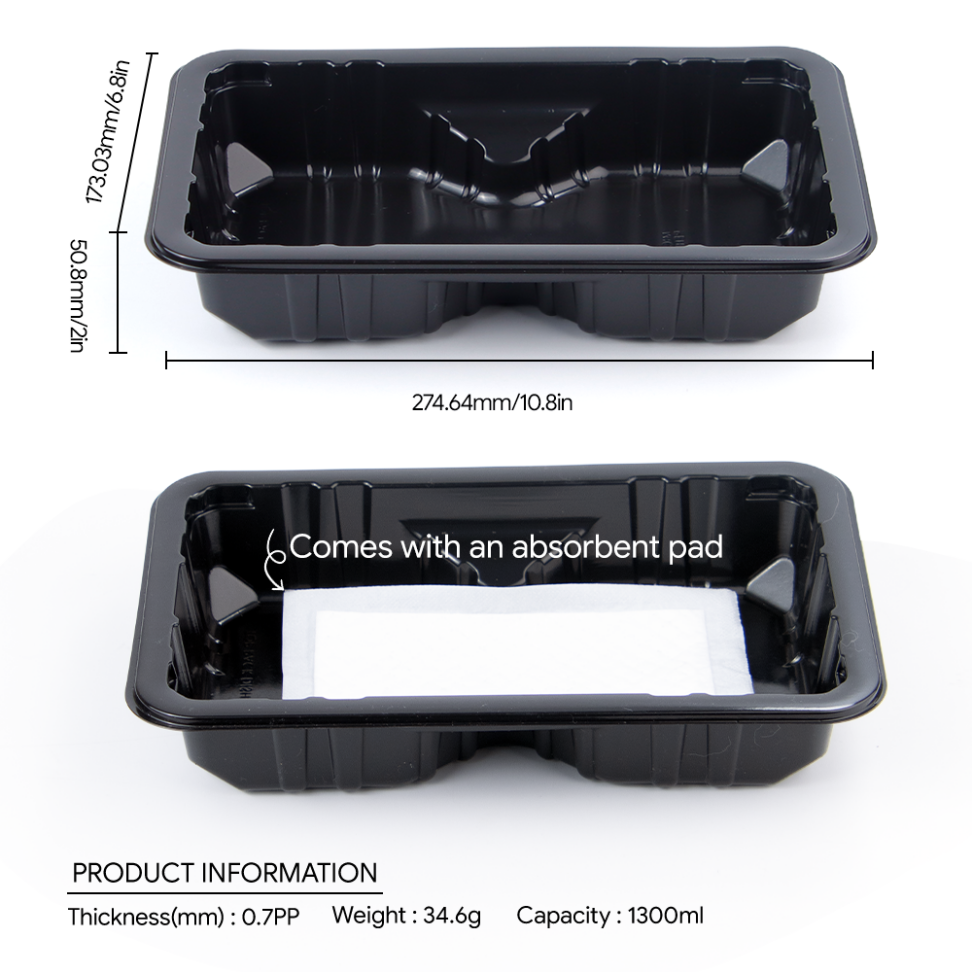
The first step in selecting the appropriate pet plas packaging is to look at how the pet plas will breathe and how much moisture it will release. The objective with fresh produce items is to prevent condensation, which can speed up spoilage. Humidity control and structure can be achieved with a perforated PET tray or a tray with a micro-perforated lidding film. A high-barrier rigid PET tray and, if applicable, an absorbent pad trap purge and prolong the display life of meat, poultry and seafood. PET offers impact resistance and stackability for egg trays. Venting and nest geometry are important in providing airflow and crush protection.
Second, choose the format for the handling environment. Takeout containers and drink carrier trays must resist grease, moisture and repeated handling. Food-grade aprons and gloves must be food-safe and meet hygiene requirements, while printed food bags must be food-safe inks and coatings. When the pack has to be stacked in automated palletizing machines or pallets are custom-made for automated industrial equipment, wall stiffness and uniformity are important, since any small deviation from uniformity can interfere with the robot's gripper.
Third, don’t look at the closure and accessory system as an extra. Cups must have lids and straws, containers must have the correct cutlery, chopsticks or stirrers for the intended use. An accessory that doesn't match the rest of the pack detracts from the whole look.
Fourth, test barriers and seals under real shelf-life conditions, not just on data sheets. Bench tests can often overlook weaknesses that are identified by the handling of the seal during distribution, seal tension during handling or temperature cycling.
Fifth, do consider end-of-life realistically. A mono-material design without dark pigments or full-body sleeves makes rigid PET more recoverable in local waste streams where such materials are accepted. Otherwise, the benefits of a mono-material with recycling capabilities may prove minimal, and the focus must shift to using the least amount of material and the least amount of food waste. For a number of fresh food products, spoilage prevention offers a greater environmental benefit than incremental improvements in packaging materials.
Last but not least, engage the packaging supplier early in the process. The most effective custom printing, structural design, and material and functional customization will be achieved when they are developed in conjunction with the filling and distribution process. It is achieved by professional custom food packaging service, free design service including typesetting and 3D drafts, free samples and OEM/ODM service, with international certificate for import compliance in the world market.
Conclusion
Its continued use for fresh foods makes PET plastic packaging a good choice—offering clarity, strength, barrier properties and process ability at a viable cost. The negative factors heat sensitivity, moderate oxygen barrier, notch sensitivity, and recycling variability are well understood and can be carefully managed if they are identified before cold-chain testing rather than discovered too late. The best results are obtained by designing packaging specifically for each product, with the right combination of material and format, based on the respiration, moisture, handling profile. The design should then be tested and refined through load tests and shelf-life testing. Food producers who treat PET as an engineered system rather than a commodity item are likely to deliver better freshness and lower waste to retail, hospitality, catering, food service, industrial and other customers.