With the pressure on all food service and retail operations to cut down on the use of single-use plastics, two materials have emerged as the main focus of discussion around eco-friendly disposable tableware: sugarcane fiber (also called bagasse) and paper. Both are vegetal based, both are sold as compostable or recyclable and both are being seen in supermarkets, takeout counters, and hospitality establishments around the world. But are they really suitable for all disposable tableware applications, or are there performance trade-offs consumers should know about before switching? This article explores the technical and practical attributes of both materials and provides a reference to the product ranges that Xiamen Xiefa Packing Co., Ltd. deals with for its clients in retail, food service, industrial and hospitality industries.
Understanding Sugarcane Fiber as a Tableware Material
Sugarcane fiber refers to the pulp that is obtained after sugarcane stalks have been crushed to yield sugarcane juice. This residue is not thrown away or burned, but instead is gathered, sanitized and formed into shapes under heat and pressure to make tableware. Final product is hard, heat resistant and grease resistant without the need for a plastic liner. Using this raw material does not require additional land for packaging, as it is already a by-product of sugar production.
Technically, sugarcane fiber is suitable for a variety of challenging applications. It's able to withstand hot and cold foods, oil and moisture, and can be molded into more complex shapes like clamshell takeout containers, drink carrier trays and compartmented trays. Most formulations are also microwave safe and safe in the freezer. These properties make sugarcane fiber popular for use in supermarket fresh produce trays, takeout containers and egg trays.
But sugarcane fiber has its drawbacks. Usually, it will cost more per piece than conventional plastic or paper, in part because of the difference in molding equipment and cycle time from plastic thermoforming. It is natural colored—an off-white or light tan—an appearance some brands avoid because it is less neutral than bleached paper or white plastic. Also, it has a reduced resistance to liquids for long periods of time, and very wet or oily foods might need to be lined or coated.
Paper as a Tableware Material: Strengths and Boundaries
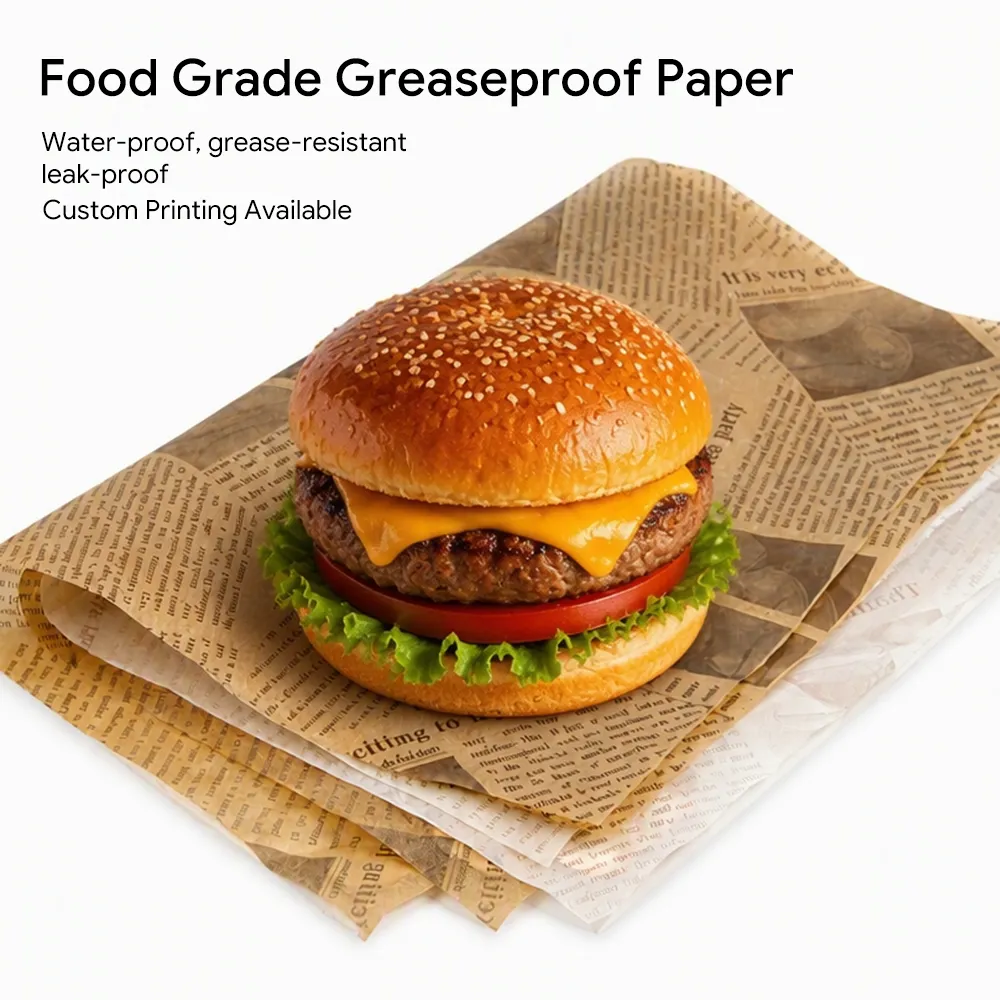
Food-grade paper formulations have been in use for more than 100 years and are far more capable than those used for food contact in previous decades. Appropriate virgin fiber, food-safe coatings and the structural design make it possible to manufacture paper cups, wrapping paper, printed food bags, takeout bags, and even cutlery sleeves. It can be printed at high resolution, it is lightweight, and it can be found in recycling streams where clean paper is collected.
The primary advantages of paper are that it's generally easy to customize and print. Brands can print their logos, nutrition facts, and marketing graphics directly on the surface of this disposable item and make it a touchpoint for the brand. That is why paper is frequently the material for takeout bags, different kinds of wrapping paper, and even printed food bags. The unit cost of paper is also lower, in terms of cost per unit, than molded sugarcane fiber for flat or folded products.
However, paper is a product with definite limits. Food packaging paper does not last long in the presence of grease or liquid, so typically a barrier coating, either a thin film of plastic, a bio-based coating or a specialized treatment to make it greaseproof is used. If the coating is plastic, it will not be accepted in industrial composting and can contaminate paper recycling streams. Paper also has less strength and rigidity as compared to molded fiber for items that require load bearing, like drink carrier trays or compartmented takeout containers. Paper is typically not the main structural element in such applications.
Where Each Material Fits in a Real Product Line
It is best to answer this question of suitability by application rather than by material. Sugarcane fiber is the more robust choice for products that are required to be stiff, strong and resistant to heat: supermarket fresh produce trays, takeout boxes, some beverage cups, egg trays and custom-made pallets for industrial automation where dimensional stability is a critical requirement. Because it is designed to be molded, it can be used for stackable, nestable designs that save storage space and reduce shipping volume.
Paper is the winning choice with the following flat, folded, printed, dry or lightly moist items: takeout bags, printed food bags, wrapping paper, food grade aprons, and cutlery or straw sleeves. It is also the natural choice for branding where print quality is desired as it takes ink and coatings consistently for large print runs.
There are some things in between. For example, molded sugarcane fiber may be used for strength in takeout drink carrier trays, or paperboard with a water-resistant coating may be used for lighter containers. The right one is based on the weight of cups, the length of time they will be carried and if they will be exposed to condensation. Likewise, sets of knives, forks and spoons can be wrapped with paper for cleanliness and identification, with the utensils being another material. That's where having a supplier who has dealt with more than just materials can make a difference for the buyer, so they don't end up with mismatches between material and function.
The Role of Certifications and Supply Chain Transparency
Suitability of materials is more than just performance. It's also a matter of compliance and credibility. International certifications are important because they ensure that a product is compliant with the food contact safety and compostability claims and or fiber sourcing requirements for global import. If you don't have this verification, you risk facing customs delays, a retailer rejection and greenwashing allegations.
Xiamen Xiefa Packing Co., Ltd. takes this into consideration, so there are international certifications for all their products and a factory direct supply, lessening the gap between manufacturing and delivery. The management team has extensive experience in packaging, having been involved in years of operating plants in overseas countries with big customers around the world. That's why the operational history is relevant when the buyer wants to be sure a sugarcane fiber tray will operate in a certain oven or a printed food bag will stand up in a moist environment.
Customization as a Deciding Factor
Many buyers will ultimately choose between sugarcane fiber and paper depending on the level of customization required. Both materials are available for custom printing, structure or shape, material or function, and accessories or components. Xiamen Xiefa Packing Co., Ltd. provides free design services, typesetting and 3D design drafts when the customer has a logo or design art file. This gives buyers a tangible reference before production and helps avoid costly mold errors.
Samples are also provided free of charge on request, enabling buyers to evaluate sugarcane fiber and paper products in actual use - hot food, oily food, cold drinks, stacking and handling - before placing a larger order. The company's range of 2,000-plus self-owned SKUs, 11 stand-alone mold-production workshops and technical teams, and close ties to manufacturing plants enable it to supply standard as well as fully custom programs. More than 50 product design patents have been granted, indicating a focus on specific packaging challenges, rather than the development of standard substitutes.
Conclusion
Sugarcane fiber and paper can both be used to create eco-friendly disposable tableware, but what is right for one application is not always right for another. Sugarcane fiber is a strong, rigid material perfect for molded tableware where heat resistance and strength are imperative. Paper, however, is preferable for affordable, flat product that is suitable for printing. Neither can take the place of the other, or an automatic choice simply because it is made of plants.
The workable route ahead is to marry material to application, to audit certifications, and to sample test pre-market. For buyers spanning retail, food service, industrial, and hospitality channels, that means finding a partner that knows the materials, understands applications, and can help you choose solutions, not just advocate one material. That's why we are exactly that: a Xiamen-based food packaging manufacturer with experience at every touchpoint, from product design and international sourcing to quality control and logistics, providing the full range of products needed—not just one material answer.