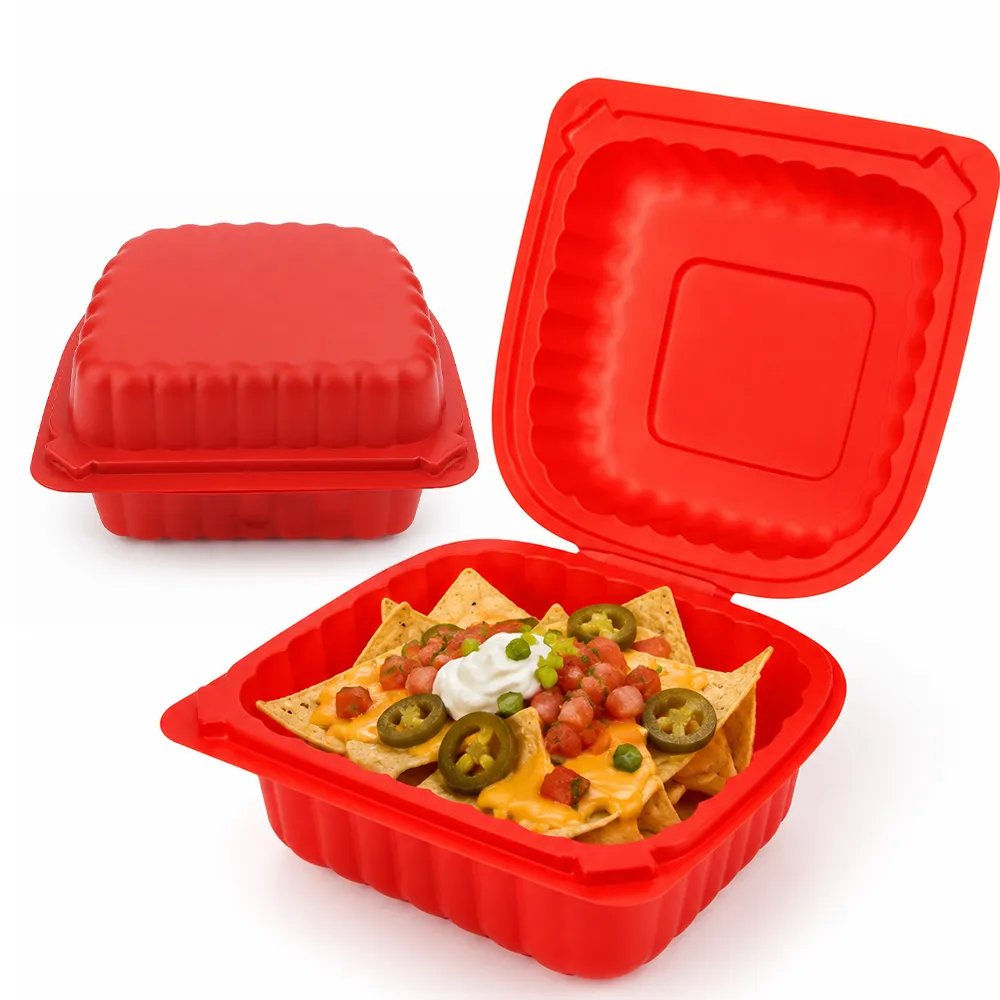
Packaging is much more than just a container—it's a tool that can and should give you an advantage in the competitive catering and meal prep industry. The right takeaway food boxes help the integrity of food, simplifies the placement of your food items, and lets everyone know you care about your brand's quality. When it comes to packaging, restaurant owners, meal prep entrepreneurs and procurement managers must be mindful of materials, functionality, and efficiency. Written by Xiamen Xiefa Packing Co., Ltd., this guide is based on decades of expertise in packaging to help you make the crucial decision on takeaway food boxes sourcing.
Understanding the Core Functions of Takeaway Food Boxes
To assess specific products, a description of what a takeaway food box should do is necessary. The basic elements of the box are to keep food safe while in transit, keep it at the proper temperature, and not leak. In today's market, their function is much more than containment, though. The box must also accommodate various styles of preparation, facilitate a smooth working environment and adhere to sustainability standards.
For catering operations where flavors must not mix, boxes usually need to be large enough to hold a complete multi-course meal. Boxes intended for meal prep businesses must be designed to withstand refrigeration and microwave reheating. Each of these cases requires a different structural and material solution—there is no such thing as a one size fits all.
Material Selection: The Foundation of Packaging Performance
The performance envelope of a takeaway food box is determined by the material used. The market can be divided into several segments, each segment offering unique benefits.
Polypropylene (PP) remains a workhorse for hot food applications. It has a high melting point and is clear enough for consumers to see the food inside—an important feature for meal prep services, where consumers are making repeat purchases due to the food's appearance in the container. PP boxes are also grease resistant and can be either hinged or with separate lids.
PET (polyethylene terephthalate) provides high clarity and rigidity for cold foods like salads, sushi and desserts. But regular PET cannot be used for microwaves because it would melt or crack, so it is better suited to chilled or room temperature foods only.
Bagasse and molded fiber are two emerging materials for compostable and biodegradable products. They are made from sugarcane pulp or other plant fibers, which can be regrown. They work well for hot foods as well as cold foods, but may have a few restrictions for saucy foods unless the material is treated or lined.
Aluminum is still a good option for catering trays or meal preparation boxes that need to be cooked in the oven. Aluminum has very high thermal conductivity, which allows it to heat evenly, and a good barrier against light and air, which helps to preserve food. Board lids are commonly used with aluminum containers for branding opportunities.
Choosing materials involves considering food compatibility, regulatory standards, end-of-life disposal, and cost. Xiamen Xiefa Packing Co., Ltd. is able to provide food packaging in all these material categories, allowing procurement teams to source quality-assured packaging from a single supplier.
Structural Design: Matching Form to Function
The layout and design of a takeaway box can impact how it is used and how well it performs. There are a number of design aspects to consider.
Compartmentalization is critical for catering boxes that carry multiple dishes. An effective divider system will ensure that sauces do not get mixed and that crisp foods do not get stuck between moist foods. Compartments aid in portion control and help people stick to specific diets for meal prep.
Ventilation is a very important factor that is very often overlooked. Some baked items and fried foods need vents to allow the steam to escape and to prevent sogginess. On the other hand, soups and stews require a completely airtight seal and should not be vented. The venting features should be matched to the menu items the buyer plans to package.
Stackability has an impact on storage and transportation expenses. Boxes are usually designed to nest or stack, which saves warehouse space and reduces the risk of damage during delivery. This is especially important for large catering businesses.
Lid mechanisms vary from hinged clamshells to separate lids with tamper-evident seals. A hinged design can minimize parts inventories and make dishes easier to assemble, and separate lids can provide a better seal for liquid-heavy dishes. Tamper evident choices give satisfaction for delivery and take out.
Custom accessories and components—such as sauce cups, cutlery, and napkin inserts—can be integrated into the box design to create a complete meal kit. Xiamen Xiefa Packing Co., Ltd. can customize accessories and components according to the menu and service model of the business to build a packaging system that is suitable for the business.
Custom Printing and Branding: Packaging as a Marketing Channel
Each takeaway box represents a touch point to your customer. Custom printing is the process of using printing to make a functional container into a branding asset. Your logo, brand colors, nutrition details, QR codes that connect to loyalty schemes and even scratch-off promotions can all be part of a high-quality print.
Printed boxes are a symbol of professionalism and attention to detail for catering companies. In the case of meal prep services, they establish brand identity in a saturated market. It all depends on choosing printing materials that can withstand the food’s end use—grease-resistant inks for hot foods, moisture-resistant coatings for refrigerated foods, and food-safe formulations throughout.
Customers can provide a logo or art file and get free design services from Xiamen Xiefa Packing Co., Ltd. such as typesetting and 3D design draft. This allows the buyer to see how the finished product will look before making any investment for the production, and therefore reduces the risk of making any costly mistakes.
Sustainability and Regulatory Compliance
Buying for sustainability is now in the mainstream. Single Use Plastic restrictions are in place or being introduced in many jurisdictions, and there is a growing consumer preference for brands that are environmentally responsible.
These demands are met with compostable and recyclable packaging. Buyers are required to confirm that claims are backed up by certifications, however. International certification, for example for compliance with global import standards, offers assurance that packaging is safe for food contact and environmentally friendly. Global import standards are ensured, providing buyers with confidence in Xiamen Xiefa Packing Co., Ltd. compliance with regulations in various markets.
The entire package life cycle should also be taken into account. A box that can be technically recycled—but isn't accepted by local recyclers is of little value. Purchasers should investigate the waste system in the area and select materials based on that.
Operational Efficiency: The Hidden Cost Driver
The unit price of takeaway food boxes is just the tip of the iceberg. The overall cost of ownership is affected by operational aspects like assembly time, storage volume and integration with current kitchen pieces.
Packing lines are slowed down by boxes that need a lot of assembly. The ones that aren't stacked efficiently are using up precious storage space. They may require extra handling if they are incompatible with blast chillers or heated holding cabinets. It is important for procurement teams to work with kitchen and logistics team to gauge practical constraints early.
Xiamen Xiefa Packing Co., Ltd. has its own mold making workshop and technical team, which allows the development of a custom structure and form to solve the specific problems faced by the operation. The company has more than 2,000 self owned SKUs and has long-term association with manufacturing plants, which are able to provide packaging solutions for both standard and custom products.
Quality Assurance and Sourcing Expertise
Quality assurance is of utmost importance in packaging food. Food safety issues, product inconsistencies and structural failures can compromise the safety of food products and harm image. A good supplier has good quality control at each step of the process—from raw material inspection to finished product testing.
Xiamen Xiefa Packing Co., Ltd. has a wealth of international sourcing and quality assurance experience. The management team has first-hand experience managing overseas factories that serve major customers around the world, and it understands the needs of various markets. This expertise helps to guarantee that buyers can have packaging that balances their requirements with what their end customers are expecting.
Conclusion
When you decide to go for certain takeaway food boxes for catering or meal prep, you can see that there are many things to consider that involve material science, interior or exterior structural design, branding, sustainability, and efficiency. You will need to consider printing options, hot or cold food applications, the number of compartments and vents required, and certification requirements. Once these questions are answered, you will be ready to choose the right catering boxes.
Xiamen Xiefa Packing Co., Ltd. stands ready to support this journey with professional custom food packaging, free design and sample services, OEM/ODM capabilities, and factory-direct supply. The company's wide selection includes supermarket fresh produce trays, takeout containers, beverage cups, food-grade accessories and even customized industrial pallets, providing customers with a complete packaging solution in retail, food service, industrial and hospitality applications. With Xiefa, you get the whole nine yards.
Table of Contents
- Understanding the Core Functions of Takeaway Food Boxes
- Material Selection: The Foundation of Packaging Performance
- Structural Design: Matching Form to Function
- Custom Printing and Branding: Packaging as a Marketing Channel
- Sustainability and Regulatory Compliance
- Operational Efficiency: The Hidden Cost Driver
- Quality Assurance and Sourcing Expertise
- Conclusion